Someone asked me last week what a rebuild actually looks like once we get past the audit. I realised I have never written that down properly, so here it is.
The honest answer starts with a number nobody agrees on. Depending which study you read, somewhere between two thirds and nineteen out of twenty AI automation projects never deliver what they promised. I am not going to pretend I know the exact figure. What I do know is that almost every study points at the same handful of reasons.
What I mean is, it is rarely the model. Broken integrations, weak or inconsistent data, and drift in how the system behaves over time are the failure modes that show up again and again, not some fundamental limit of the technology itself.
Here is what a rebuild actually involves, once the audit is done. First, the workflow itself gets mapped properly, including the parts nobody documented. Then the technical side gets checked, every integration, every data source, every place the system quietly touches something else. Then the operational side, who actually owns this once it is live, what happens when it breaks, who gets told.
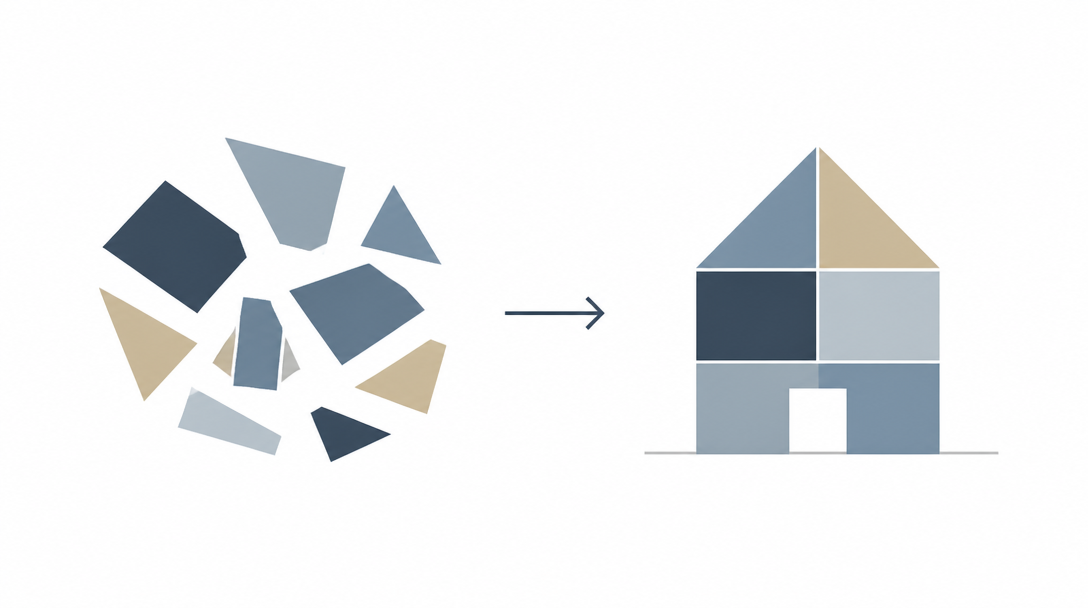
That sounds slow. It is not, not compared to the alternative. A single enterprise use case, done properly, typically takes three to six months from audit to live. For one process rather than a full rollout, that timeline is usually a lot shorter, closer to weeks. Either way it beats the alternative most businesses are already living with, which is a system quietly not working for however long nobody noticed.
I might be wrong about exactly how the economics land for every business, but the range in the research is consistent enough to trust directionally. A properly rebuilt automation commonly saves twenty to thirty percent in operating costs and ten to fifteen hours per employee per week, with first year returns often landing between two hundred and four hundred percent once it actually runs the way it was supposed to.
But here is something worth sitting with. The average cost of a failed enterprise AI initiative runs somewhere between two point three and seven point two million dollars, and that number rarely shows up as one bad day. It shows up as months of a system quietly doing the wrong thing while everyone assumes it is working.
That is the whole case for doing this properly the first time, or fixing it properly the second time. Not speed. Not hype. Just something that actually runs the way it is supposed to, and someone who can tell you exactly why.
If you think something in your stack might be in that quiet not working state, that is usually the easiest thing to check first.
Devasya